

The first building that comes to mind at the mention of Söğüt. By tradition Ertuğrul Gazi died in 1281 and was buried here. The first form of the tomb is held to have been built by his son Osman Gazi.
What you see today is largely the product of a thorough restoration in the late nineteenth century. Carried out under Abdul Hamid II, that intervention both renewed the building and tied the commemoration of the founding to a regular, state-organised ceremony. So the structure you visit is not a thirteenth-century relic; it is also a document of how the founding was meant to be remembered in the nineteenth century.
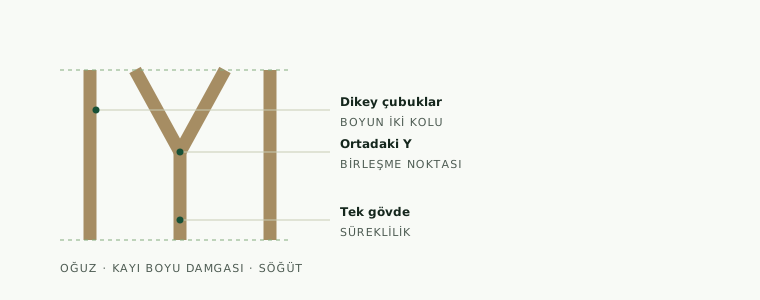
Around the tomb lie other graves from the founding period. Some of the headstones carry the mark of the Kayı tribe (IYI) — two vertical strokes with a Y between them, a sign you will meet all over Söğüt, from carpet motifs to shop signs.
The tomb is a place of worship and respect. Keep quiet during your visit, and ask the staff before taking photographs.
Gallery


Other stops